
Fix Water Damage Toronto
Structural drying measured against moisture readings, not the calendar
Equipment stays in place until materials return to a normal moisture range, verified with meters — not pulled on a fixed number of days regardless of what the readings say.
Email Us for a Free Estimate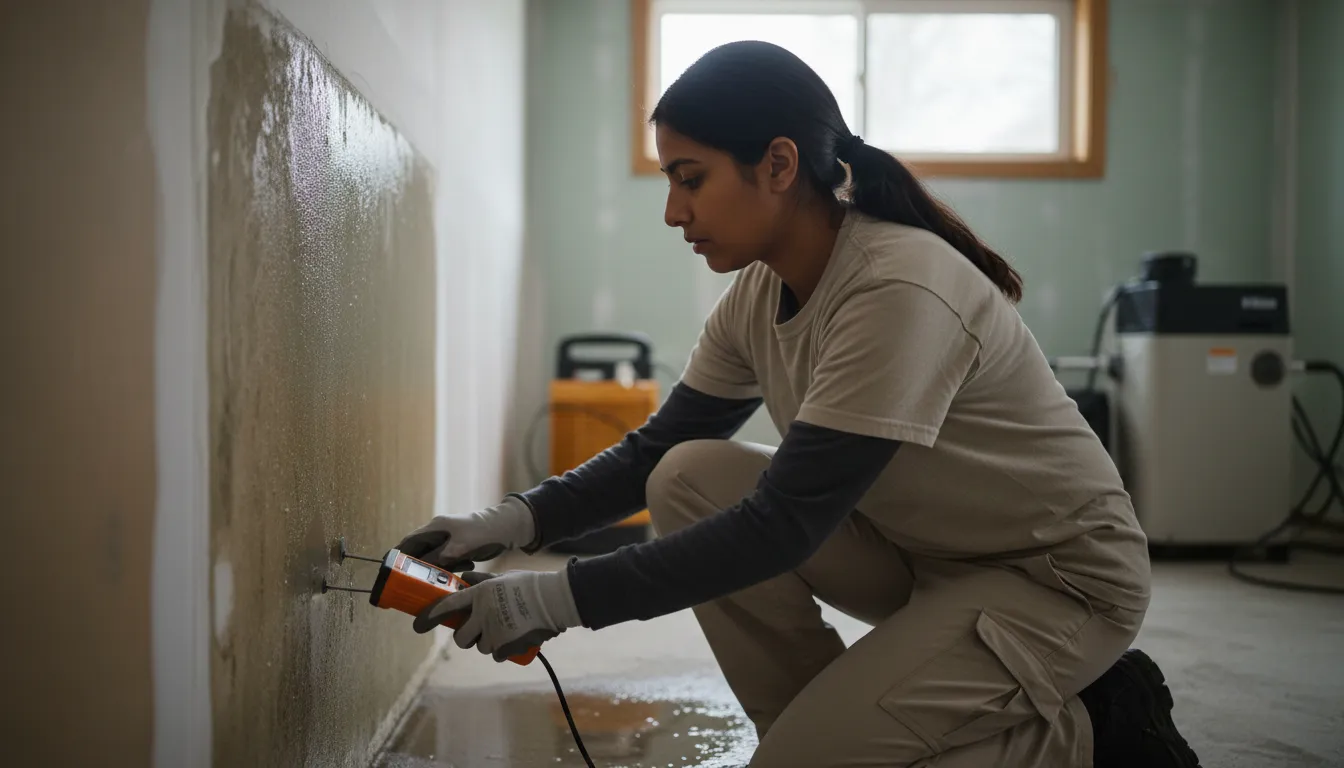
Why structural drying is different in older versus newer GTA housing
The materials behind the wall matter as much as the water itself. Toronto's mix of pre-war, postwar and new-build housing each dry at different rates and require different equipment placement.
Plaster and lath assemblies
Century homes in neighbourhoods like Riverdale and the Junction often have original lath-and-plaster walls, which hold moisture longer than drywall and can crack or delaminate if dried too aggressively or too slowly.
Balloon-framed wall cavities
Many pre-1950s Toronto homes use balloon framing, where wall cavities run continuously from basement to attic without fire-blocking. Water introduced at one level can migrate through the cavity, which changes how airflow needs to be directed during drying.
Modern engineered assemblies
Newer builds across the 905 regions use engineered wood, spray foam and vapour barriers that trap moisture differently than older open-cavity construction, sometimes requiring cavity access to dry effectively.
Humidity load from Ontario summers
Southern Ontario's humid summers mean ambient moisture is already elevated for much of the year, so dehumidification capacity has to account for outdoor conditions, not just the water introduced by the loss itself.
Surface-dry is a common false signal
Flooring and drywall can feel dry to the touch while the subfloor, wall cavity or insulation behind them remain saturated. Pulling drying equipment based on how a room looks or feels — rather than what a meter reads — is one of the most common reasons water damage recurs as mould weeks later.
Log readings, adjust equipment, verify before removal
We take baseline moisture readings at intake, place air movers and dehumidifiers sized to the affected area, and re-check readings on a schedule. Equipment placement is adjusted as materials dry unevenly, and readings are compared against unaffected reference areas in the same home before we consider the job complete.
Structural drying process
Every step ties back to a measurement, not an estimate.
- 1
Baseline moisture readings
We measure affected materials and compare against an unaffected reference area in the same structure.
- 2
Equipment sizing and placement
Air movers and dehumidifiers are sized to the affected square footage and material types involved.
- 3
Monitoring and adjustment
Readings are re-checked on a schedule, and equipment is repositioned as some areas dry faster than others.
- 4
Verification against reference readings
Materials are confirmed dry relative to the reference area before equipment is considered for removal.
- 5
Equipment removal and sign-off
Equipment is removed once verification is complete, with a written record of final readings.
Why choose our structural drying approach
Drying is where most restoration jobs succeed or quietly fail.
Meter-verified completion
Equipment isn't removed until moisture readings confirm the structure is dry.
Licensed & insured
Drying work is carried out under appropriate licensing and insurance coverage.
Assembly-specific technique
We adjust equipment placement for plaster, balloon framing, spray foam and other assembly types.
Humidity-aware sizing
Dehumidification capacity accounts for Ontario's seasonal humidity, not just the water introduced by the loss.
Responsive by email
Requests are reviewed and prioritized by severity.
Written verification records
You receive documented readings showing the structure returned to a normal moisture range.
Structural drying questions
How long does structural drying typically take?
It depends on the material, the extent of saturation, and ambient humidity, which is why we verify with moisture readings rather than committing to a fixed number of days upfront.
Can drying be done without removing drywall?
In many cases, yes, if moisture hasn't penetrated too deeply and the cavity can be dried with adequate airflow. Where readings show deeper saturation, opening the wall may be necessary.
Why does humidity outside affect drying indoors?
Dehumidifiers work by removing moisture from the air, and their effective capacity is influenced by ambient humidity and temperature, both of which shift seasonally in southern Ontario.
How do you know when drying is complete?
We compare moisture readings in the affected area against an unaffected reference area in the same home; when they're consistent, the material is considered dry.
How do I request a quote for structural drying?
Email us with your address and a description of the affected area, and we'll follow up with next steps.
Get a moisture-verified drying plan
Email us your address and a description of the affected area to get started.
Email Us for a Free EstimateWeather drives water-damage risk — email us if you find water.
Fall water-damage conditions in Toronto, ON
Fall rain around Toronto, ON tests gutters, sump pumps, and foundations; catching leaks and seepage early prevents the slow water damage and mold that surface over winter.
Proudly Serving Toronto, ON
Local, on-time service throughout Toronto and the surrounding area.