
Fix Water Damage Toronto
Storm damage restoration for the GTA's increasingly intense weather
From lake-effect snow melt to summer microbursts, GTA storms bring water into homes through the roof, windows and grading. We assess the entry point first, then restore.
Email Us for a Free Estimate
How GTA storms cause water intrusion
The Greater Toronto Area sees a mix of summer thunderstorms, lake-effect snow off Lake Ontario, and shoulder-season ice storms, each with a different intrusion pattern.
Wind-driven rain against older siding and windows
In older neighbourhoods with original wood-frame windows or aging siding, wind-driven rain during a summer storm can be forced past flashing and weatherstripping that has degraded over decades, leading to intrusion around window frames and wall penetrations.
Roof damage from wind and hail
High winds off Lake Ontario and occasional hail events can lift shingles or damage flashing around chimneys and vents, creating a path for rain to enter the attic and work down through ceiling insulation before it's noticed.
Ice damming after lake-effect snow
Homes downwind of Lake Ontario can accumulate significant lake-effect snow load. When attic heat loss melts snow at the roof peak faster than at the eaves, the refrozen meltwater forms an ice dam that backs water up under shingles.
Overland flooding from intense summer downpours
Short-duration, high-intensity summer storms can drop significant rainfall in under an hour, overwhelming municipal storm sewers and causing overland flooding that pools against foundations faster than grading can direct it away.
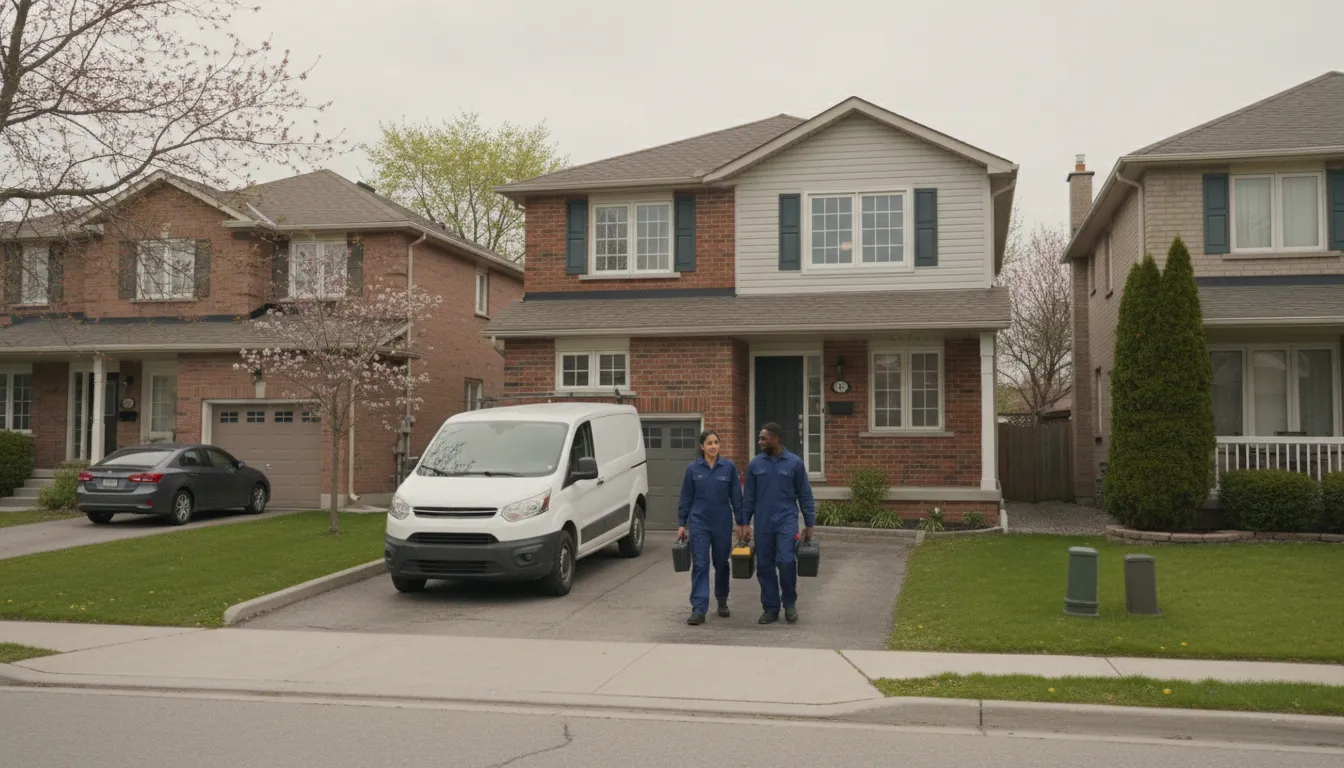
Storm intrusion is often hidden until it's extensive
Unlike a burst pipe, storm-related water intrusion often enters slowly through a roof or wall assembly, meaning it can travel through insulation and framing for some time before it shows as a ceiling stain or damp wall. By the time it's visible, the affected area is frequently larger than the visible damage suggests.
Trace the entry point, then map the full extent
We start by identifying how and where water entered — roof, window, grading, or a combination — and then use moisture meters to map how far it has travelled through the structure. That mapping determines the drying plan and identifies any materials that need to be opened up or removed rather than dried in place.
Storm damage restoration process
Storm damage often involves more than one entry point, so mapping comes first.
- 1
Entry point assessment
We identify where water entered — roof, window, siding, or grading — often in coordination with a roofer if structural repair is also needed.
- 2
Moisture mapping
Meters are used to trace how far moisture has travelled through insulation, framing and finishes.
- 3
Extraction and removal
Standing water is extracted and materials that can't be dried in place are removed.
- 4
Structural drying
Air movers and dehumidifiers are placed according to the mapped extent of the intrusion.
- 5
Verification
Moisture readings confirm the structure is dry before equipment is removed.
Why choose us for storm damage restoration
Storm damage restoration depends on correctly tracing water intrusion before drying begins.
Entry-point tracing
We identify how water got in before deciding how to dry it out.
Licensed & insured
Restoration work is carried out under appropriate licensing and insurance.
Seasonal awareness
We account for how lake-effect snow, ice damming and summer storms each create different intrusion patterns.
Coordination with other trades
Where roofing or window repair is needed alongside drying, we can coordinate timing.
Responsive by email
Requests are reviewed and prioritized by severity.
Documented findings
You receive a written record of the entry point and extent of moisture found.
Storm damage restoration questions
How do I know if storm water has entered my attic or walls?
Signs include ceiling stains, a musty smell, peeling paint near windows, or damp insulation visible from an attic hatch. Moisture meters can confirm the extent even when it isn't visible yet.
Does ice damming count as storm damage?
Yes. Ice dams form after heavy snow accumulation and attic heat loss, and the resulting backed-up meltwater under shingles is a common cause of GTA winter water intrusion.
Do you coordinate with roofers for storm repairs?
Yes, where the entry point requires roofing or exterior repair, we can coordinate timing so drying proceeds alongside that work.
How far can storm water travel before it's noticed?
It varies, but water can move through insulation and framing for some distance from the entry point before it becomes visible as a stain, which is why moisture mapping matters.
How do I request a quote after storm damage?
Email us with your address and a description of the storm event and any visible signs of water intrusion, and we'll follow up with next steps.
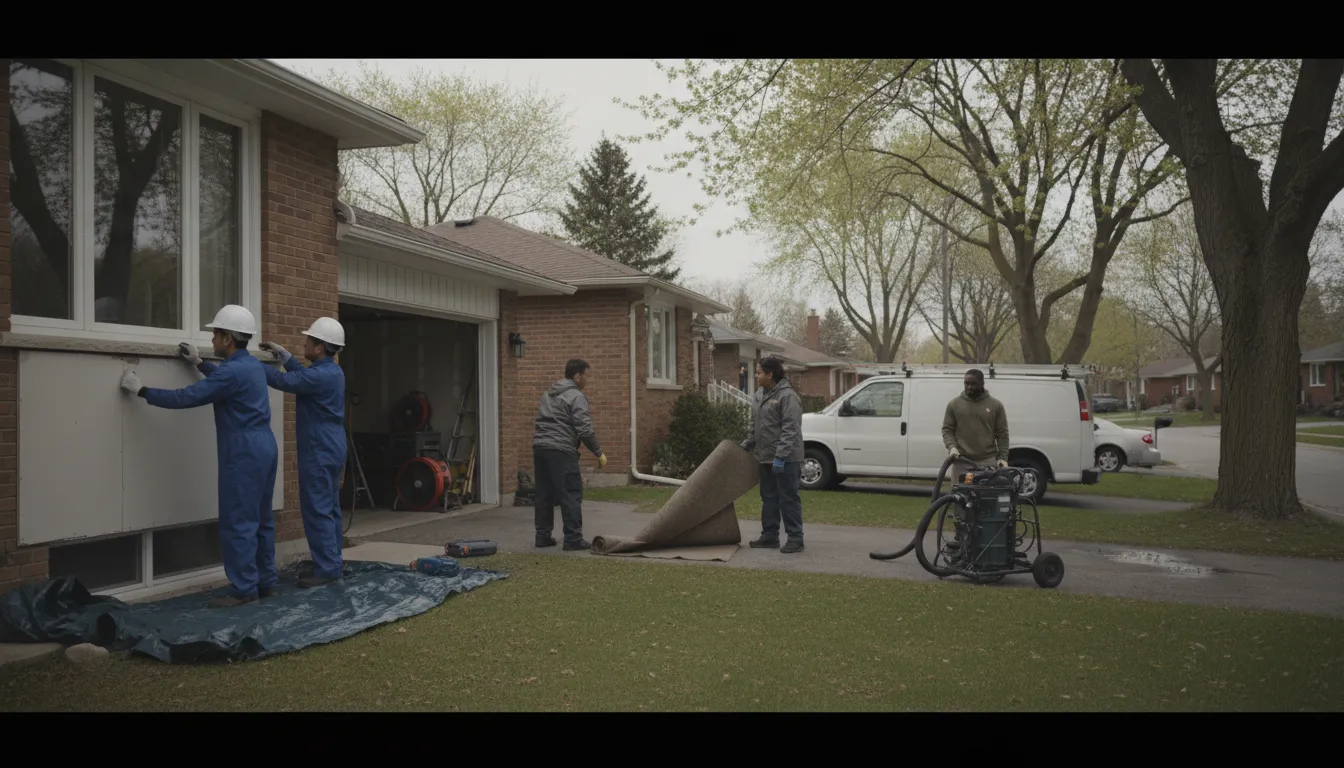
Storm damage? Email us the details
Tell us your address and what you're seeing, and we'll advise on next steps.
Email Us for a Free EstimateWeather drives water-damage risk — email us if you find water.
Fall water-damage conditions in Toronto, ON
Fall rain around Toronto, ON tests gutters, sump pumps, and foundations; catching leaks and seepage early prevents the slow water damage and mold that surface over winter.
Proudly Serving Toronto, ON
Local, on-time service throughout Toronto and the surrounding area.