
Fix Water Damage Toronto
Emergency water mitigation to stop the loss before it spreads
The goal of mitigation is simple to state and precise to execute: stop water at its source, remove what's standing, and begin drying before materials absorb more than they can shed.
Email Us for a Free Estimate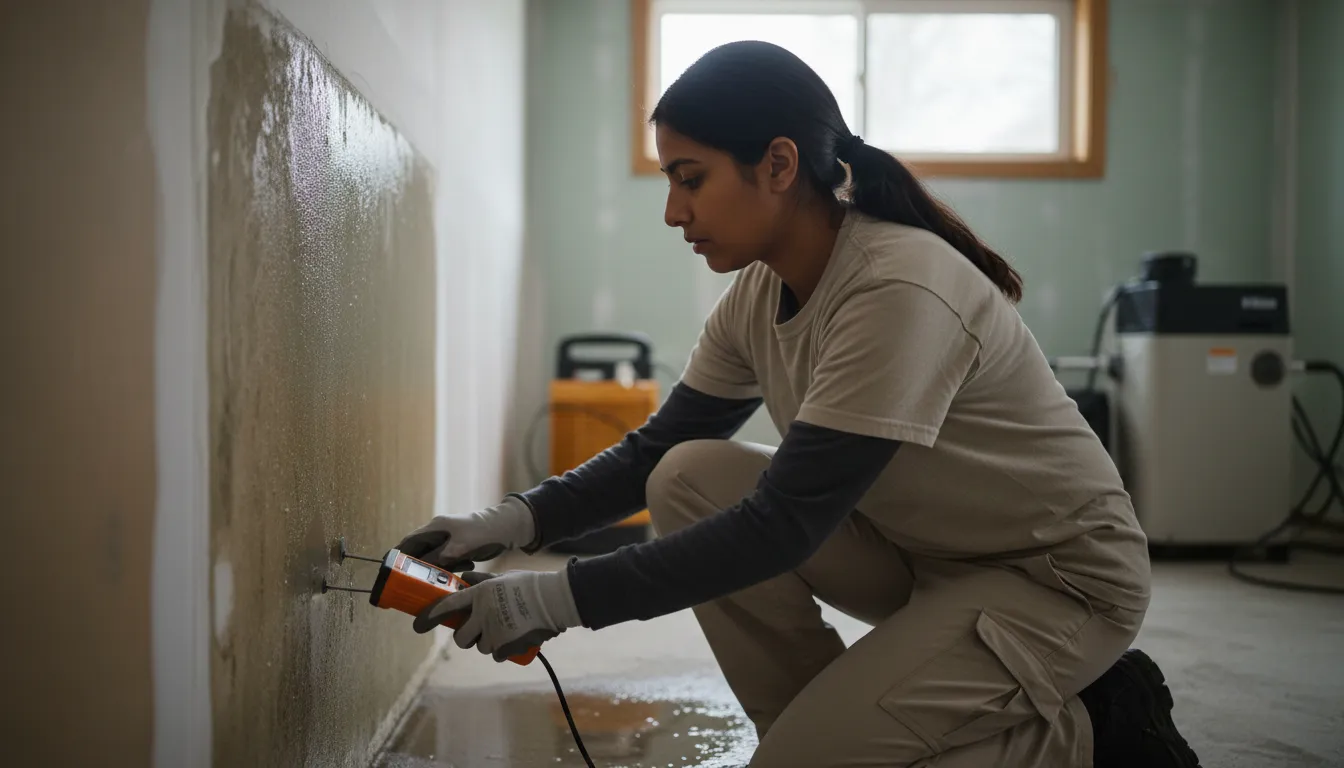
Why mitigation is a time-sensitive discipline
Mitigation is the set of actions taken in the first hours after water intrusion to limit how much a loss grows. In the GTA, the pace of that growth depends heavily on building type and season.
Basement apartments and grade-level suites
Toronto has a large stock of basement apartments, common in neighbourhoods like Etobicoke and Scarborough, where floor levels sit close to or below the exterior grade. A blocked weeping tile or a sump pump failure during a spring downpour can put water across an entire suite within an hour.
Shared plumbing chases in multi-unit buildings
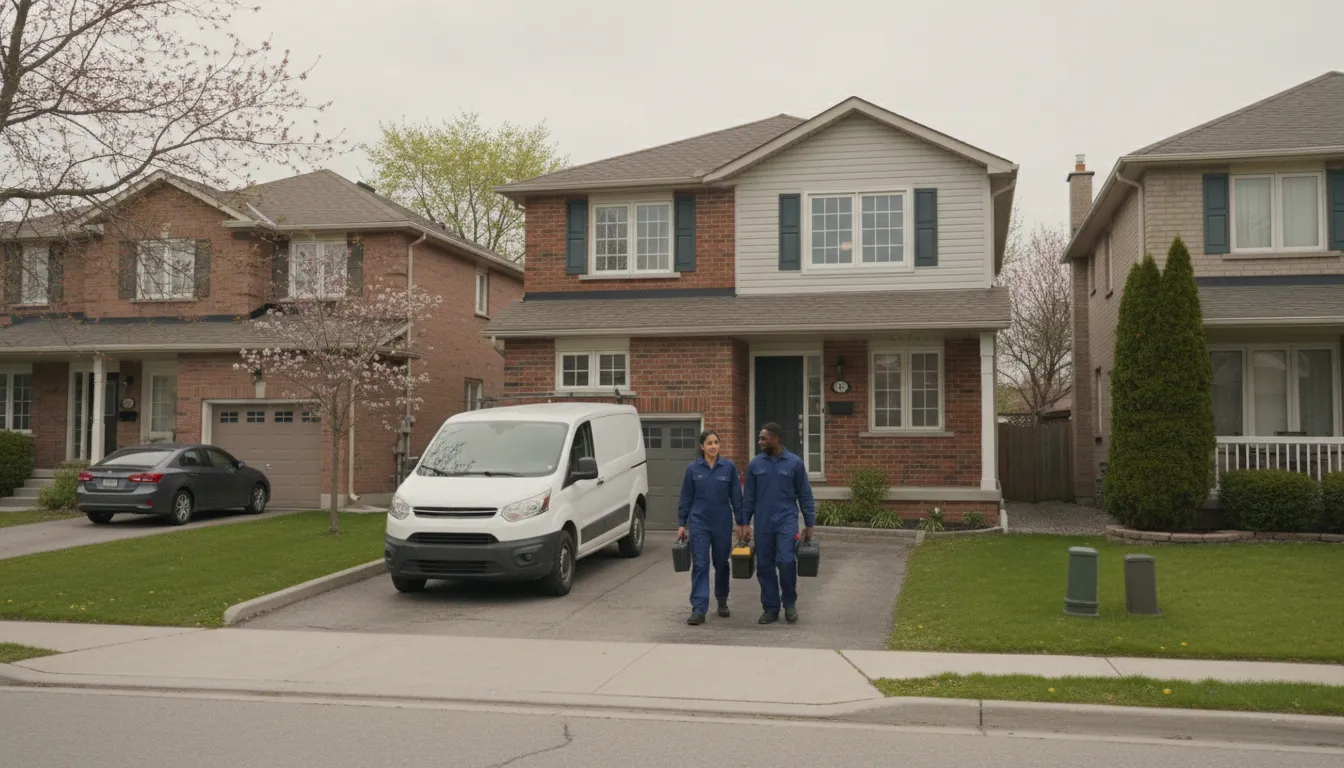
In townhomes and low-rise apartment buildings across the GTA, plumbing often runs through shared chases between units. A supply line failure in one unit can mitigate into a neighbour's space before it's discovered, which is why rapid response protects more than just the unit of origin.
Seasonal timing changes urgency
A summer thunderstorm intrusion in July behaves differently than a January pipe freeze — humidity and ambient temperature both affect how fast materials will support mould growth, which shapes how aggressively we deploy drying equipment on arrival.
Delay turns a mitigation job into a reconstruction job
Once water sits for more than a day or two, the calculus changes. Drywall that could have been dried in place now needs to be cut back. Engineered flooring that cupped slightly can delaminate past the point of drying. Insulation inside a wall cavity, once saturated, rarely dries fast enough to avoid replacement. Every hour of delay shifts work from the drying column to the demolition column.
Front-loaded, methodical response
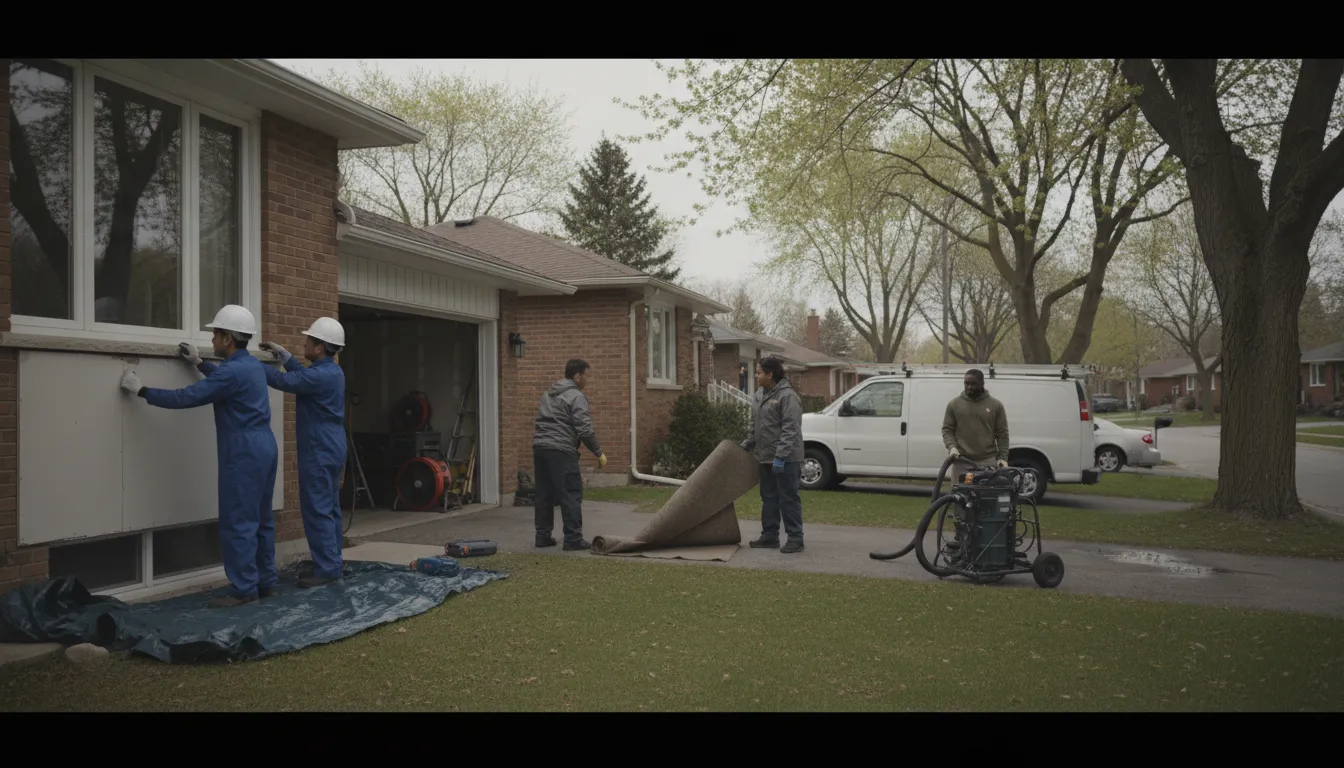
Our mitigation visits prioritize stopping the source, extracting standing water, and establishing airflow and dehumidification the same day. We document moisture levels at intake so that decisions about what to dry versus what to remove are based on measurements, not assumptions, and so the record is available if you need it for an insurance claim.
Our mitigation process
Mitigation moves fast, but each step is still logged and verified.
- 1
Source control
Identify and stop the source of water intrusion where possible, or coordinate with a plumber if the source requires a separate trade.
- 2
Initial moisture mapping
Meters are used to establish which materials are wet, to what depth, and what category of water is involved.
- 3
Standing water extraction
Water is removed from floors and saturated flooring using extraction equipment matched to the surface.
- 4
Equipment deployment
Air movers and dehumidifiers are placed according to the affected square footage and material types.
Why choose our mitigation team
Mitigation decisions made in the first hours affect the entire remainder of the restoration.
Documented intake
Moisture readings are recorded from the first visit, not estimated after the fact.
Licensed & insured
All mitigation work is performed under appropriate licensing and insurance.
Category-appropriate handling
Clean water, grey water and black water losses are each handled with the containment steps they require.
GTA familiarity
We're familiar with the building types common across Toronto and the surrounding regions, from century homes to condo towers.
Prompt follow-up
Email requests are reviewed and prioritized by severity.
Clear scope of work
You receive a written outline of what was found and what's being done about it.
Emergency mitigation questions
What counts as an emergency water mitigation situation?
Any active water intrusion — a burst supply line, an overflowing appliance, a failed sump pump, or overland flooding — where standing water is present or materials are actively absorbing moisture.
How fast can mitigation begin?
We prioritize active-loss situations and aim to begin mitigation as soon as possible after you reach out by email with the details.
Do you coordinate with plumbers if the source needs repair?
Yes, where the water source requires plumbing work, we can coordinate timing so drying begins as soon as the source is controlled.
Is mitigation the same as full restoration?
No. Mitigation is the initial phase focused on stopping the loss and beginning drying. Full restoration, including any rebuild work, follows once the structure is verified dry.
What information should I include when I email you?
Your address, a short description of the water source, when it started, and photos if available. That lets us give you a clearer sense of next steps before we arrive.
Active water intrusion? Email us the details now
Include your address and a short description of the source so we can respond with next steps.
Email Us for a Free EstimateWeather drives water-damage risk — email us if you find water.
Fall water-damage conditions in Toronto, ON
Fall rain around Toronto, ON tests gutters, sump pumps, and foundations; catching leaks and seepage early prevents the slow water damage and mold that surface over winter.
Proudly Serving Toronto, ON
Local, on-time service throughout Toronto and the surrounding area.