
Fix Water Damage Toronto
Water damage restoration engineered to Ontario building standards
We diagnose moisture intrusion, extract standing water and dry the structure using documented drying protocols, not guesswork. Serving Toronto and the surrounding GTA.
Email Us for a Free Estimate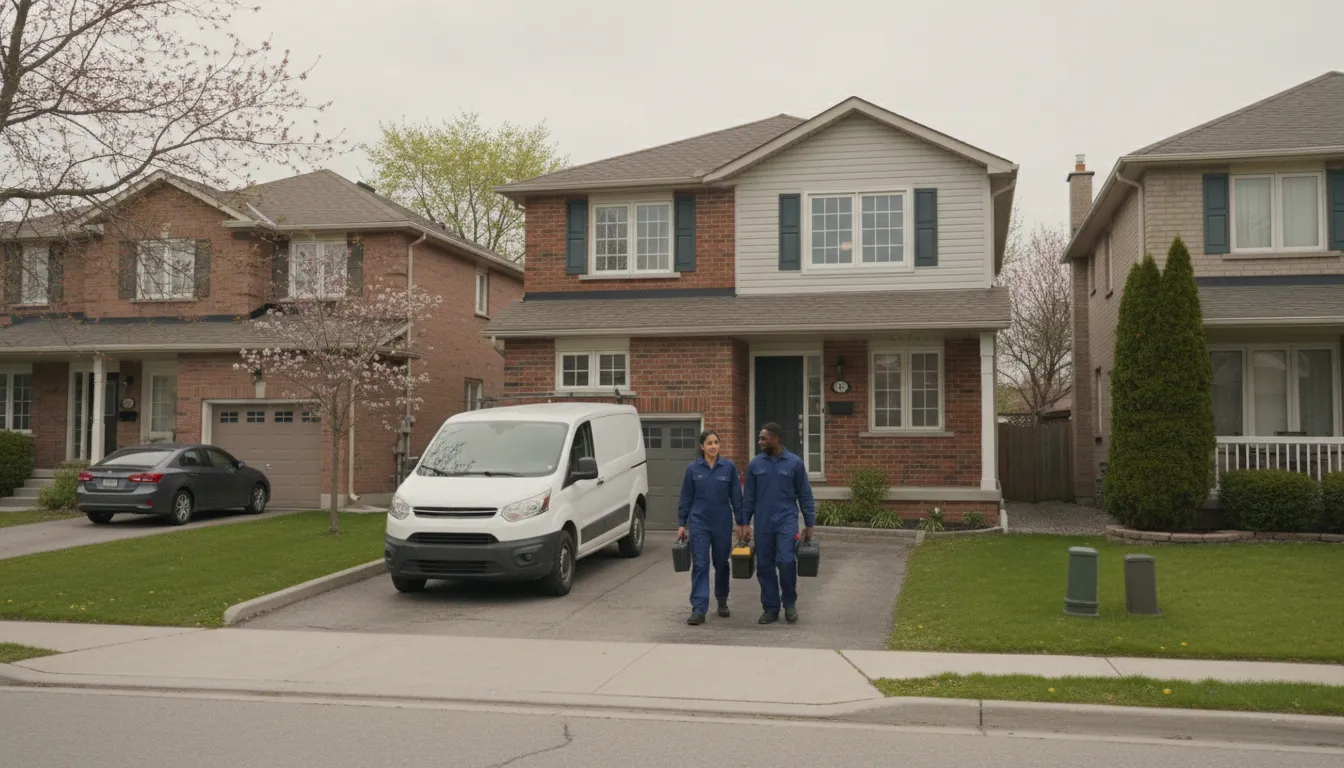
Why water damage behaves differently in Toronto homes
Toronto's housing stock spans century-old brick semis in the east end, mid-century bungalows in Scarborough and North York, and glass-tower condos downtown. Each building type fails differently when water gets in, and each demands a different drying strategy.
Century homes and stone foundations
Older Toronto homes near the Danforth or in Cabbagetown often sit on rubble or parged stone foundations that were never designed to be fully waterproof. Hydrostatic pressure from spring thaw pushes moisture through hairline cracks, and the original lath-and-plaster walls hold that moisture far longer than modern drywall.
Freeze-thaw cycling
Southern Ontario winters swing above and below zero repeatedly. Water that enters a foundation crack in November can freeze, expand the crack, thaw in a January melt, and re-freeze again before spring — widening the entry point with every cycle.
High-rise condo stacking
In condo towers along the waterfront and in the Yonge corridor, a single failed supply line or overflowing in-suite laundry can cascade through several floors before it's caught, since drywall bulkheads and shared plumbing chases move water sideways as much as down.
Clay-heavy soil and grading
Much of Toronto sits on clay-rich soil that expands when saturated and shrinks when dry. That movement stresses foundation walls over time and is a common contributor to the basement seepage we see after heavy spring rain.
Water damage left untreated compounds fast
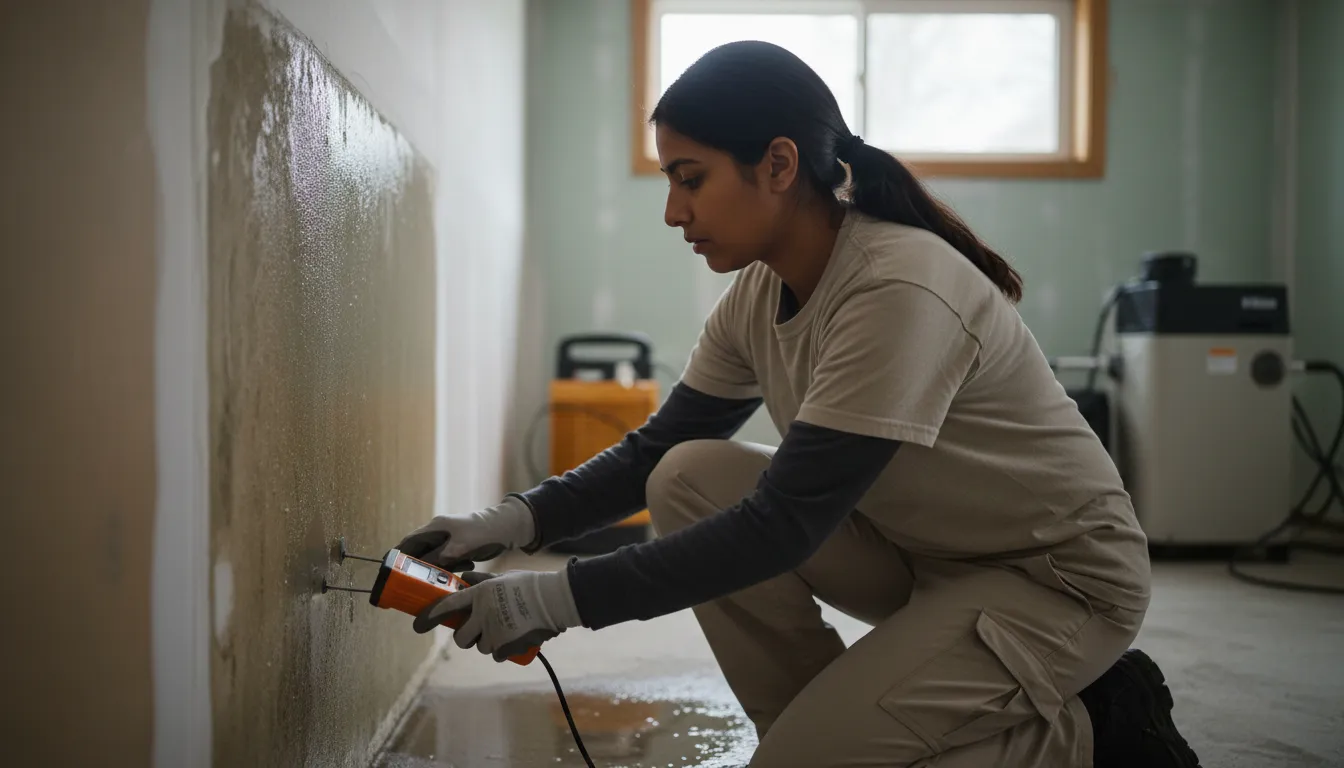
The first 24 to 48 hours after a water intrusion determine whether the job stays a drying job or becomes a demolition job. Drywall wicks moisture upward from the base, engineered hardwood cups and delaminates, and framing lumber begins to hold moisture that mould can colonize within 48 to 72 hours at typical indoor humidity. Surface-dry is not the same as structurally dry — carpet pad, subfloor and the wall cavity behind the baseboard can all hold water long after the floor feels dry to the touch.
A measured, sequenced drying process
We start with moisture mapping using penetrating and non-penetrating meters to establish exactly which materials are wet and to what depth, then extract standing water, then set air movers and dehumidifiers sized to the actual class and category of loss. We re-check moisture content on a schedule until materials return to a normal reference range, rather than pulling equipment on a fixed timeline. That's the difference between a room that looks dry and a room that is dry.
Our water damage services
Each service below follows a documented process suited to the type and category of water loss.
Emergency Water Mitigation Toronto
Rapid response to stop active water intrusion and begin extraction before materials absorb further moisture.
Learn moreFlood Cleanup Toronto
Full cleanup and material assessment after basement or overland flooding, including contaminated-water protocols where needed.
Learn moreSewage Cleanup Toronto
Category 3 water handling with appropriate containment, disposal and sanitizing of affected materials.
Learn moreStorm Damage Restoration Toronto
Assessment and drying after wind-driven rain, roof intrusion or overland flooding from severe weather.
Learn moreStructural Drying & Dehumidification Toronto
Engineered drying plans using calibrated air movement and dehumidification, verified with moisture readings.
Learn moreWater Extraction Toronto
Mechanical removal of standing water from floors, carpet and subfloor using truck-mount and portable extraction equipment.
Learn moreWhat sets our approach apart
We treat drying as a measurable engineering process, not a guessing game with a few fans.
Moisture-mapped, not eyeballed
Every affected area is measured with meters at intake and re-measured before equipment is removed.
Licensed & insured
Work is carried out under proper licensing and insurance coverage for restoration work in Ontario.
Category-aware protocols
Clean, grey and black water losses are handled with different containment and disposal steps, matched to the actual contamination category.
Respect for older building assemblies
We understand how lath-and-plaster, balloon framing and stone foundations respond to moisture differently than modern construction.
Response built around your schedule
Reach out by email any time; we prioritize based on the severity and category of the loss.
Clear documentation
You receive a written record of moisture readings and drying progress, useful for insurance purposes.
How a typical restoration proceeds
The sequence below adapts to the scale of the loss, but the underlying logic stays the same: assess, stop, extract, dry, verify.
- 1
Assessment and moisture mapping
We identify the water source, classify the category of water, and map which materials are affected and to what depth using moisture meters.
- 2
Water extraction
Standing water is removed with truck-mount or portable extraction equipment appropriate to the volume and surface type.
- 3
Containment and removal of unsalvageable material
Where materials such as saturated insulation or contaminated drywall cannot be dried safely, they're removed and disposed of properly, with containment to limit spread.
- 4
Structural drying
Air movers and dehumidifiers are placed according to a drying plan and adjusted as moisture readings change.
- 5
Verification
Materials are re-tested against normal moisture reference levels before equipment is pulled and the job is closed out.
Common questions about water damage restoration
How quickly should water damage be addressed in a Toronto home?
Within the first 24 to 48 hours ideally. Ontario's humid summers and the moisture already present in older building materials mean mould colonization can begin faster than in drier climates. Prompt extraction and drying materially reduce how much material needs to be replaced.
Do you handle sewage backups as well as clean water losses?
Yes. Sewage and other Category 3 water losses require different containment, PPE and disposal protocols than a clean supply-line leak, and we scope the job accordingly from the first visit.
Will my insurance cover water damage restoration?
Coverage depends on your policy and the cause of loss. We provide moisture documentation and a written scope of work that you can submit to your insurer, though we recommend confirming coverage details directly with your provider.
How do I request a quote?
Email us with your address, a brief description of the water source, and photos if you have them. We'll follow up with next steps.
Do older Toronto homes need a different drying approach than newer builds?
Often, yes. Plaster walls, balloon-framed cavities and stone or rubble foundations hold and move moisture differently than drywall and poured concrete, so drying equipment placement and monitoring schedules are adjusted for the building type.
Service coverage
Serving the Entire Greater Toronto Area
5 regions, 29 communities — wherever you are in the GTA, Fix Water Damage Toronto is close by. Pick your area to see how we can help.
| Region | Communities served |
|---|---|
| City of TorontoView region → | Downtown Toronto · East York · Etobicoke · North York · Scarborough |
| York RegionView region → | Aurora · East Gwillimbury · Georgina · King · Markham · Newmarket · Richmond Hill · Vaughan · Whitchurch-Stouffville |
| Peel RegionView region → | Brampton · Caledon · Mississauga |
| Halton RegionView region → | Burlington · Halton Hills · Milton · Oakville |
| Durham RegionView region → | Ajax · Brock · Clarington · Oshawa · Pickering · Scugog · Uxbridge · Whitby |
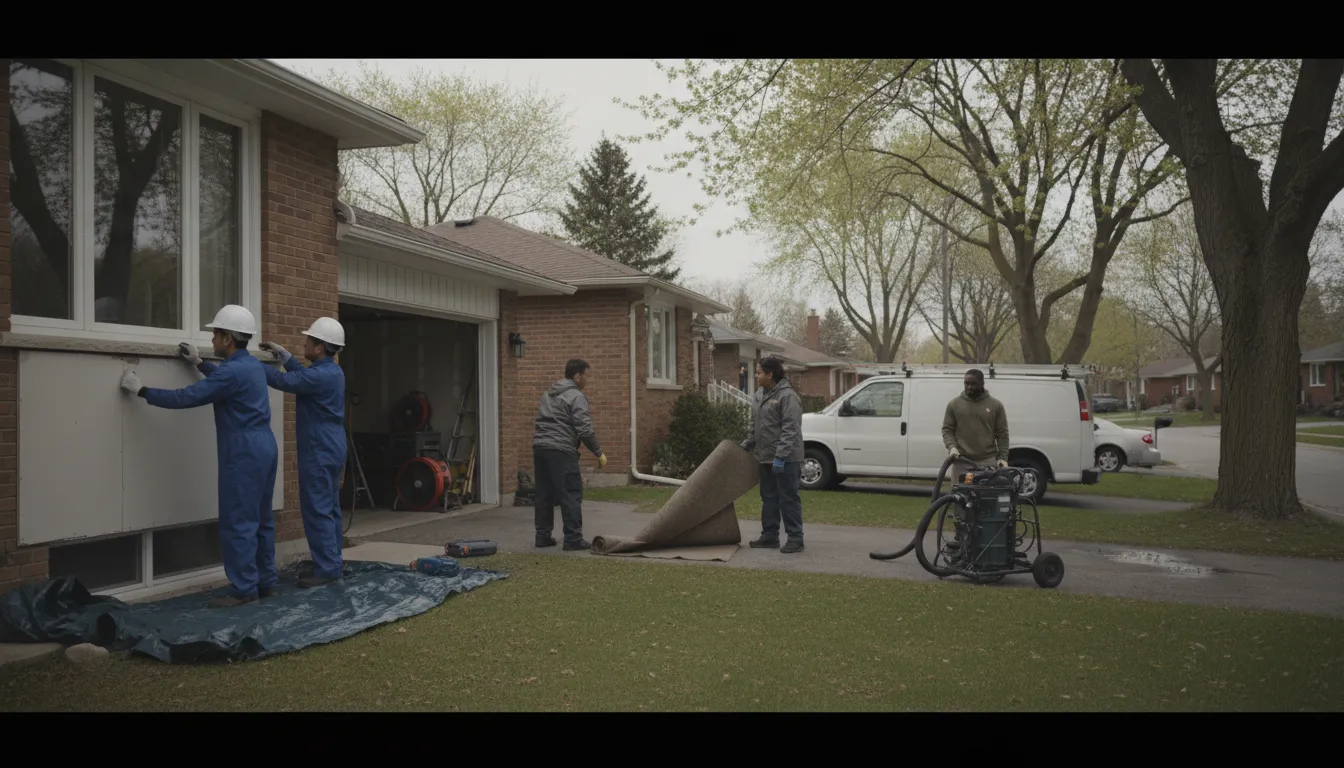
Get a documented assessment of your water damage
Email us with your address and a short description of what happened. We'll outline next steps.
Email Us for a Free EstimateWeather drives water-damage risk — email us if you find water.
Fall water-damage conditions in Toronto, ON
Fall rain around Toronto, ON tests gutters, sump pumps, and foundations; catching leaks and seepage early prevents the slow water damage and mold that surface over winter.
Proudly Serving Toronto, ON
Local, on-time service throughout Toronto and the surrounding area.