
Fix Water Damage Toronto
Flood cleanup built around how Toronto basements actually flood
Basement flooding in the GTA usually traces back to one of a handful of causes — weeping tile failure, sump pump overload, or overland water finding a low point in the grading. Our cleanup process starts with identifying which one applies.
Email Us for a Free Estimate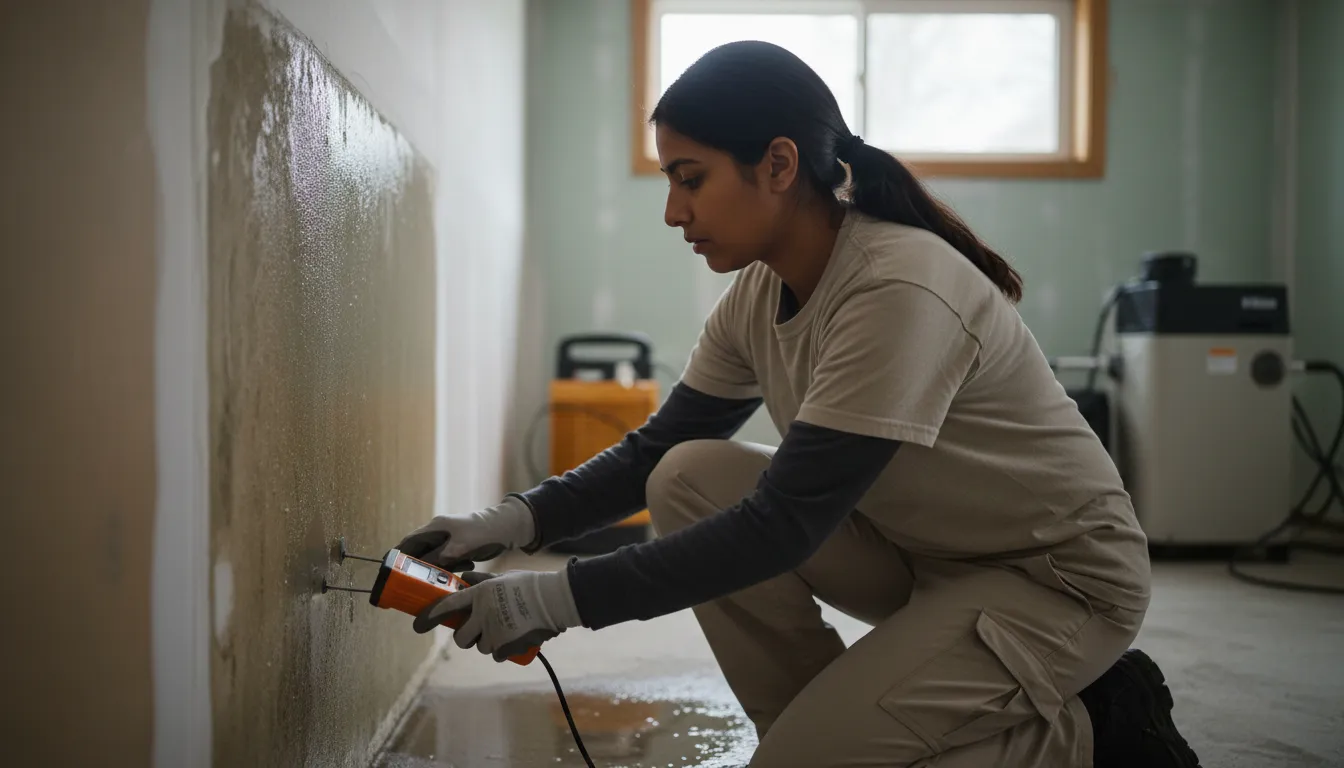
How flooding shows up differently across the GTA
Flooding is rarely just 'water in the basement' — the mechanism behind it shapes both the cleanup and the fix.
Weeping tile and foundation drainage failure
Many homes built from the 1950s through the 1980s across North York and Etobicoke have aging weeping tile systems. As these clog with silt or collapse, hydrostatic pressure during a heavy spring rain has nowhere to go but through the foundation wall or floor slab.
Sump pump overload during intense rainfall
Short, intense summer storms — increasingly common across the GTA — can overwhelm a sump pump's capacity or trip a breaker at the worst possible moment, leading to a fast basement flood even in homes with working drainage systems.
Overland flooding and grading issues
In neighbourhoods where lot grading slopes toward the house rather than away from it, or where a downspout discharges too close to the foundation, heavy rain can pool against the foundation and find its way in through cracks or window wells.
Ravine and low-lying lot exposure
Properties near Toronto's ravine system or in low-lying areas of Etobicoke and Scarborough face a higher water table during wet seasons, which increases hydrostatic pressure on foundations even without a direct storm event.
Flood water carries more than moisture
Overland and basement flood water often carries silt, lawn chemicals or, in some cases, backed-up sewer content, depending on the source. Treating every flood the same way risks missing contamination that needs proper handling, and it risks drying materials that should instead be removed. Carpet, carpet pad and baseboard trim in a flooded basement typically can't be salvaged once they've been submerged for any length of time.
Diagnose the source, then scope the cleanup
We identify whether the flood is clean groundwater, grey water, or contaminated water, and scope removal and drying accordingly. Unsalvageable materials are removed early so drying equipment isn't wasted trying to dry something that needs to be replaced, and the remaining structure is dried and verified with moisture readings.
Flood cleanup process
The process below applies whether the flood came from groundwater, a storm, or a mechanical failure.
- 1
Source identification
We determine whether the flooding originated from groundwater, overland water, or a mechanical failure such as a sump pump.
- 2
Extraction
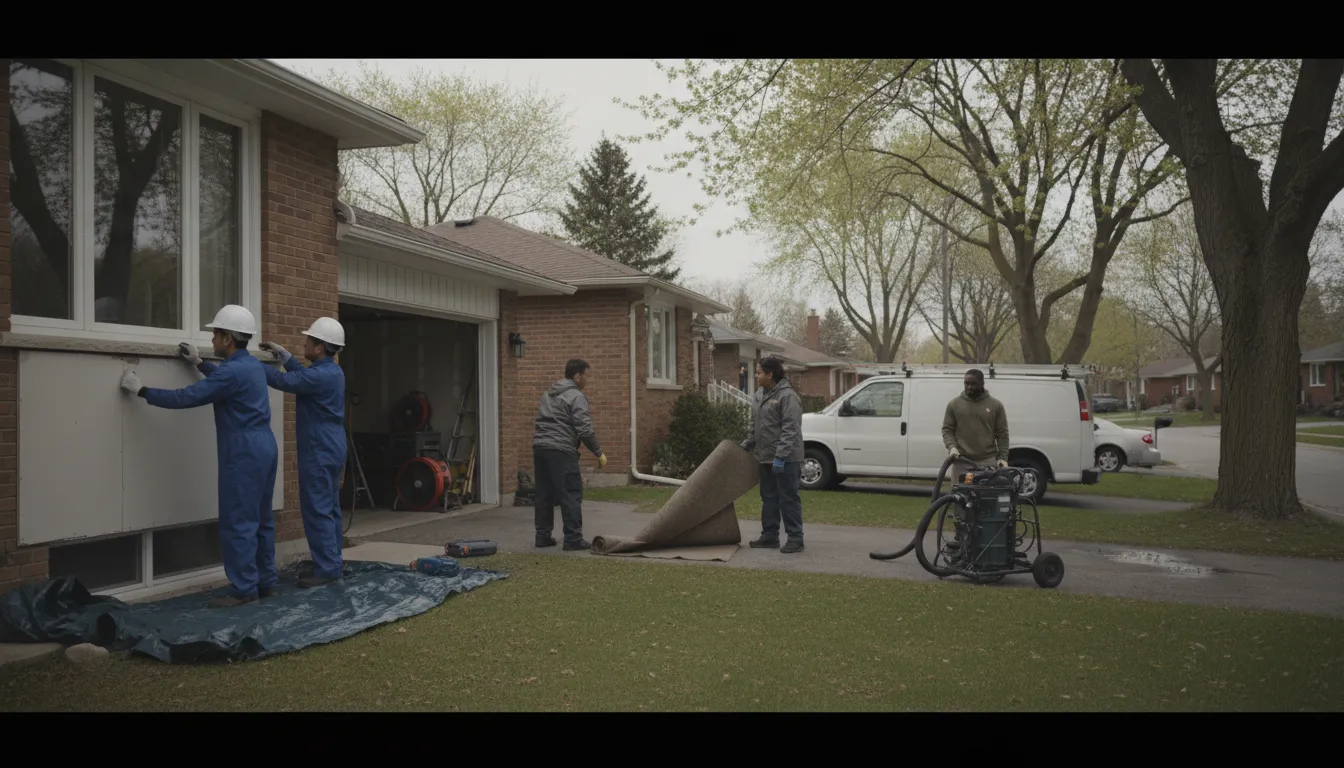
Standing water is extracted from the floor and any saturated flooring materials.
- 3
Removal of unsalvageable materials
Carpet, pad, baseboards or drywall that cannot be safely dried are removed and disposed of.
- 4
Structural drying
Air movers and dehumidifiers are set according to the affected area and monitored on a schedule.
- 5
Verification
Moisture readings confirm the structure has returned to a normal range before the job closes.
Why choose us for flood cleanup
Flood cleanup done well depends on correctly identifying what you're dealing with before drying begins.
Source-first approach
We identify the flooding mechanism before deciding what to dry and what to remove.
Licensed & insured
Cleanup work is performed under appropriate licensing and insurance coverage.
Contamination-aware
We treat clean, grey and contaminated flood water differently, as each requires its own handling.
Familiar with GTA drainage patterns
We understand common flooding mechanisms across different eras of GTA housing stock.
Responsive by email
Requests are reviewed and prioritized based on severity.
Written documentation
You receive a record of findings and work performed.
Flood cleanup questions
Is basement flooding always the same type of cleanup?
No. Clean groundwater intrusion is handled differently from flooding that's picked up contaminants, and identifying the source is the first step in our process.
Can carpet be saved after a basement flood?
Often not, particularly carpet pad, which holds moisture and is difficult to dry fully in place. We assess on a case-by-case basis.
What causes recurring basement flooding in older GTA homes?
Aging or collapsed weeping tile, undersized or failing sump pumps, and grading that directs water toward the foundation are the most common recurring causes we see.
Do you remove damaged drywall and baseboards?
Yes, where materials can't be safely dried in place, we remove them as part of the cleanup so the remaining structure can dry properly.
How do I get a quote for flood cleanup?
Email us with your address and a description of the flooding, including how it started if known, and we'll follow up with next steps.
Flooded basement? Email us the details
Tell us your address and what happened, and we'll outline next steps.
Email Us for a Free EstimateWeather drives water-damage risk — email us if you find water.
Fall water-damage conditions in Toronto, ON
Fall rain around Toronto, ON tests gutters, sump pumps, and foundations; catching leaks and seepage early prevents the slow water damage and mold that surface over winter.
Proudly Serving Toronto, ON
Local, on-time service throughout Toronto and the surrounding area.